
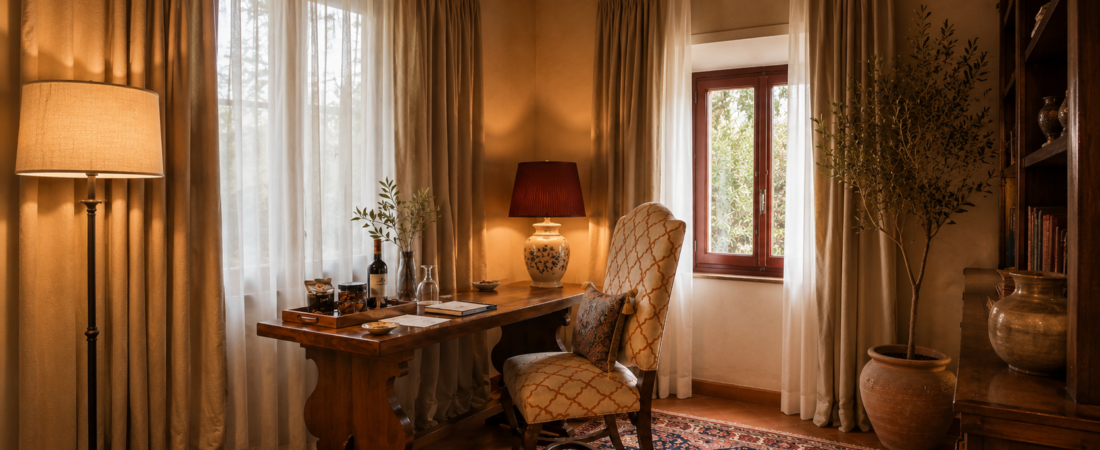
7 Tips To Authenticity
What makes a home feel Italian is not one single design feature, but a feeling of warmth, beauty, ease, and lived-in elegance. An Italian-inspired home is not about recreating a villa in Tuscany or filling every room with obvious Mediterranean details. It is about creating a space that feels warm, intentional, lived-in, and quietly beautiful.
Italian interiors have a particular kind of elegance. They are rarely perfect in a polished, showroom way. Instead, they feel collected over time. To create an Italian-inspired home, begin with atmosphere rather than decoration. Think about how light enters the room, how people gather, how objects are used, and how each material feels to the touch. The goal is not to make your home look themed. The goal is to create a home that feels natural, graceful, and deeply connected to everyday life.
1. Palette
A warm Mediterranean Palette is one of the simplest ways to bring an Italian feeling into your home. Instead of cool grays or stark whites, start with warm neutrals: ivory, cream, soft beige, sand, stone, and warm white.
These tones create a calm foundation. They reflect natural light beautifully and allow the rest of the room to feel soft rather than harsh.
Once the base is neutral, add Mediterranean color in small, thoughtful ways. Terracotta, olive green, ochre, clay, muted rust, deep espresso brown, and aged brass can bring warmth and depth without overwhelming the space.
A terracotta vase on a console, olive-green cushions on a linen sofa, a warm clay-toned rug, or a painted niche can be enough. Italian-inspired interiors often feel refined because they do not try too hard.
Choose colors that feel sun-warmed, earthy, and natural.
The most elegant palette is usually restrained. Let the room breathe, then use color as an accent rather than a statement everywhere.
2. Natural Materials
An Italian-inspired home depends on natural materials that add character and age beautifully. This may sound intimating at first, but can be as simple as incorperating wood, stone, linen, terracotta, plaster, iron, leather, marble, and ceramics. These all bring a sense of permanence and authenticity.
The beauty of these materials is that they age well. They do not need to look perfect forever. In fact, part of their charm is the way they soften, deepen, and develop patina over time.
A wooden dining table with small marks, a stone surface with natural variation, linen curtains that move with the breeze, or a ceramic bowl with an imperfect glaze can make a room feel more personal.
This is one of the most important principles of Italian living: beauty does not have to be flawless.
If you are not renovating, start small. Replace glossy accessories with ceramic, wood, or woven pieces. Add linen napkins to the table. Use a terracotta planter. Choose a handmade bowl instead of something overly polished.
Small material changes can shift the entire feeling of a room.
3. Add Texture Through Plaster, Wood, Linen, and Stone
Texture is what gives an Italian-inspired interior its depth. A room can have the right colors, but without texture it may still feel flat.
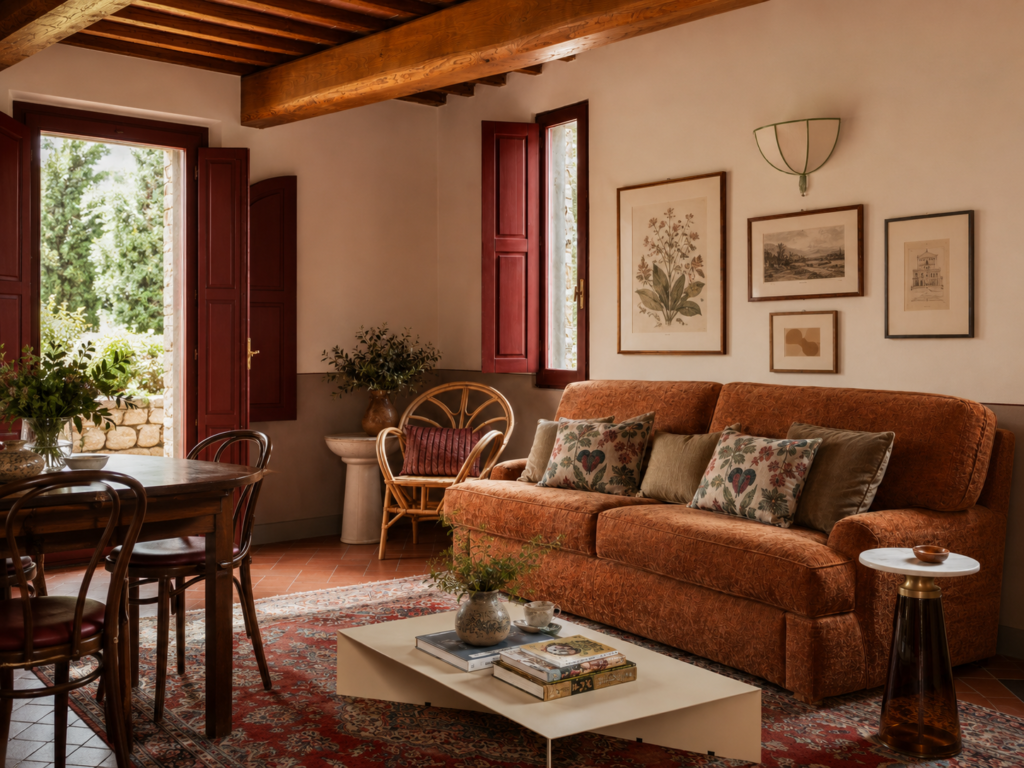
Think of limewash walls, plaster finishes, exposed or reclaimed wood, woven textiles, matte ceramics, natural stone, linen curtains, wool throws, and aged metal. Italian interiors often feel beautiful because they contain subtle irregularities. A wall does not need to be perfectly smooth. A table does not need to look new. A textile does not need to be perfectly pressed.
These details make a home feel alive. Avoid too many high-gloss surfaces if you want a softer Mediterranean mood. Matte, honed, brushed, aged, and hand-finished textures tend to feel more timeless.
A simple combination can work beautifully: warm plaster walls, a wood table, linen curtains, a ceramic lamp, and a vase of olive branches. You do not need much more.
4. Use Architectural Details with Restraint
Architecture plays an important role in Italian interiors, but it should never feel forced.
Arches, niches, shutters, exposed beams, terracotta floors, stone surrounds, and wrought iron details can all suggest an Italian atmosphere. The key is to use them with restraint and proportion.
An arched doorway can soften the transition between rooms. A built-in niche can create a quiet focal point. Wood beams can add warmth. Terracotta tile can bring earthiness. Wrought iron can work beautifully in lighting, railings, cabinet hardware, or curtain rods.
But too many architectural references can quickly feel theatrical.
If your home is modern, you can still bring in Italian-inspired character through smaller touches: an arched mirror, a plaster-style wall finish, antique brass or iron hardware, a clay tile backsplash, or a stone tray on a kitchen counter.
Italian influence should be suggested, not staged.
5. Choose Furniture Made for Gathering
Italian homes are often centered around gathering. The table matters. The living room matters. The kitchen matters. These are spaces where conversation happens, food is shared, coffee is offered, and daily life unfolds.
When choosing furniture, look for pieces that feel grounded and comfortable. A solid wood dining table, linen dining chairs, a deep sofa, a vintage cabinet, a simple bench, or a weathered sideboard can all support the feeling. The furniture does not need to be ornate. In fact, the best Italian-inspired rooms often combine simplicity with character.
A rustic table can sit beside modern chairs. A vintage cabinet can work with a clean-lined sofa. A marble side table can soften a casual living room. A wooden chest can become a quiet focal point in an entryway or bedroom.
The room should feel collected over time, not purchased all at once. Choose pieces that invite use. Italian-inspired design is not only about how a room looks; it is about how a room lives..
6. Mix Antique and Modern Pieces
One of the easiest ways to avoid a “theme” is to mix eras. A fully rustic room can feel heavy. A fully modern room can feel cold. But when antique and modern pieces are balanced, the result feels elegant, personal, and timeless.
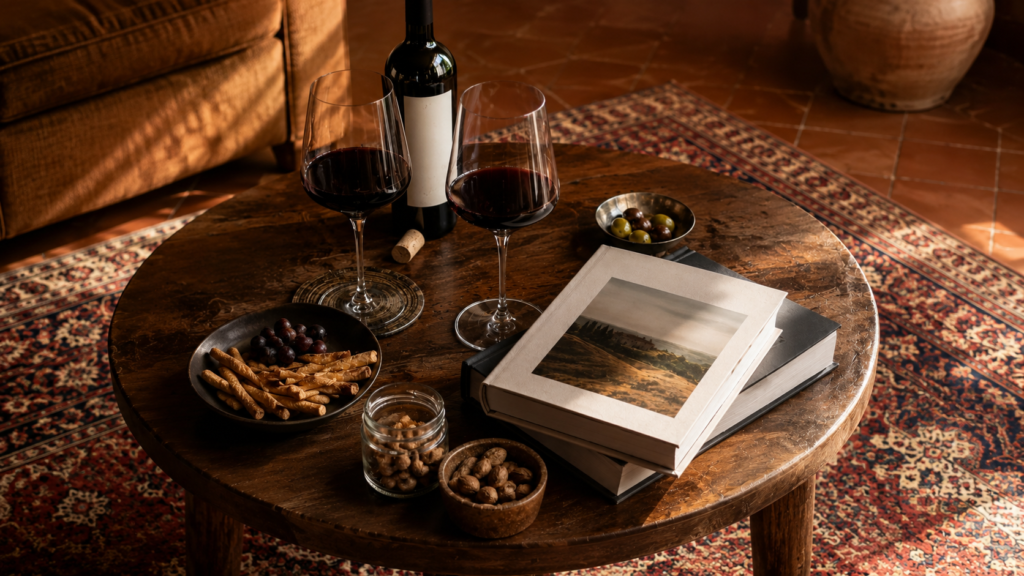
Start with one older piece: a carved sideboard, a vintage mirror, a wooden dining table, an antique chest, or a framed landscape painting. Then balance it with simpler contemporary shapes.
The connection should come through materials and tone. Wood, linen, iron, leather, stone, and ceramic can help different pieces feel related even if they come from different periods. Do not worry if everything does not match perfectly. In an Italian-inspired home, harmony matters more than matching.
When using vintage or antique furniture, preserve some patina. A rubbed edge, faded finish, or small imperfection can add warmth. The goal is not perfection. The goal is presence.
7. Decorate with Ceramics, Art, and Everyday Objects
Italian-inspired decor works best when it feels useful, personal, and beautiful.
Instead of filling shelves with objects that serve no purpose, choose pieces that can be used and enjoyed: ceramic bowls, terracotta vessels, linen runners, framed artwork, woven baskets, cookbooks, brass trays, pottery, glassware, and serving pieces. Open shelving can be beautiful when it holds objects that feel real. Plates, bowls, pitchers, glasses, books, and olive oil bottles can all become part of the visual story of the home.
Ceramics are especially important. Hand-thrown bowls, glazed plates, terracotta planters, and simple vessels bring color, texture, and craftsmanship. They do not need to be perfect. Slight variations often make them more beautiful.
Art can also help create atmosphere. Choose pieces with warmth: landscapes, still lifes, architectural sketches, muted florals, or abstract works in earthy tones. A single large artwork above a sofa or a small collected arrangement in a hallway can make a room feel layered and personal.
Textiles complete the feeling. Linen curtains, cotton slipcovers, wool throws, woven rugs, embroidered napkins, and table runners soften the harder materials and make the home feel lived-in. A linen cloth does not need to be perfectly ironed. A stack of books does not need to be perfectly arranged. A bowl of lemons or olives can be enough.
The best decorative details feel natural, not staged.
Final Thoughts
Creating an Italian-inspired home is not about imitation. It is about atmosphere. It is about choosing natural materials, warm colors, meaningful objects, and spaces that invite people to gather. It is about allowing beauty to exist in everyday rituals: a meal, a morning coffee, an open window, a table set with care.
An Italian-inspired home does not have to be expensive. It does not have to be perfect. It should feel intentional, welcoming, and quietly refined. Start slowly. Choose one corner, one table, one room, one ritual. Add warmth. Add texture. Add something handmade. Remove what feels unnecessary.
Over time, the home begins to feel less decorated and more alive.
That is the beauty of Italian-inspired living: it is not only a style. It is a way of creating a home that feels warm, timeless, and beautifully lived-in.