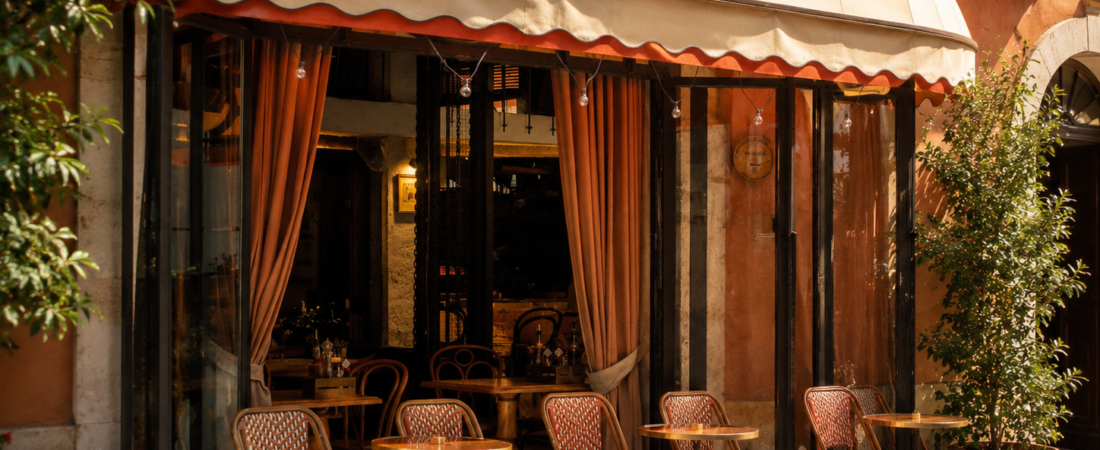
There is a particular kind of afternoon in Rome when nothing remarkable seems to be happening. Someone lingers outside a bar with an espresso finished ten minutes ago. A grandmother leans from her balcony to trade a few words with someone passing below. In the piazza, people start to reappear as the heat of the day loosens its grip.
No one would call this slow living. It’s simply life — and that’s what gets lost when la dolce vita is translated as “the sweet life” and pictured as something glamorous: linen dresses, a villa on the Amalfi Coast. The Italian art of slow living is quieter than that. It’s the habit of noticing when something deserves your time, and giving it that time.
What Does La Dolce Vita Really Mean?
Literally, “the sweet life.” In everyday use, it points to something broader: the pleasure of living well, not extravagantly. Living well might mean drinking your coffee from a proper cup instead of carrying it through emails. Sitting down for dinner even when the meal is simple. Waiting for tomatoes to be in season, because in August they actually taste like something. A walk through the neighborhood for no better reason than that the air feels good.
These moments are small. Italian life has traditionally made room for them anyway — which is probably why so many people from elsewhere feel drawn to it. Italy has a way of reminding you that an ordinary Tuesday doesn’t have to feel like one.
Slow Living Isn’t About Doing Nothing
The easiest misunderstanding is that slow living means moving slowly, working less, or having no ambition. Rome can be fast, loud, and maddeningly inefficient — buses that don’t come, bureaucracy that eats a morning. People still have jobs, trains, bills to pay.
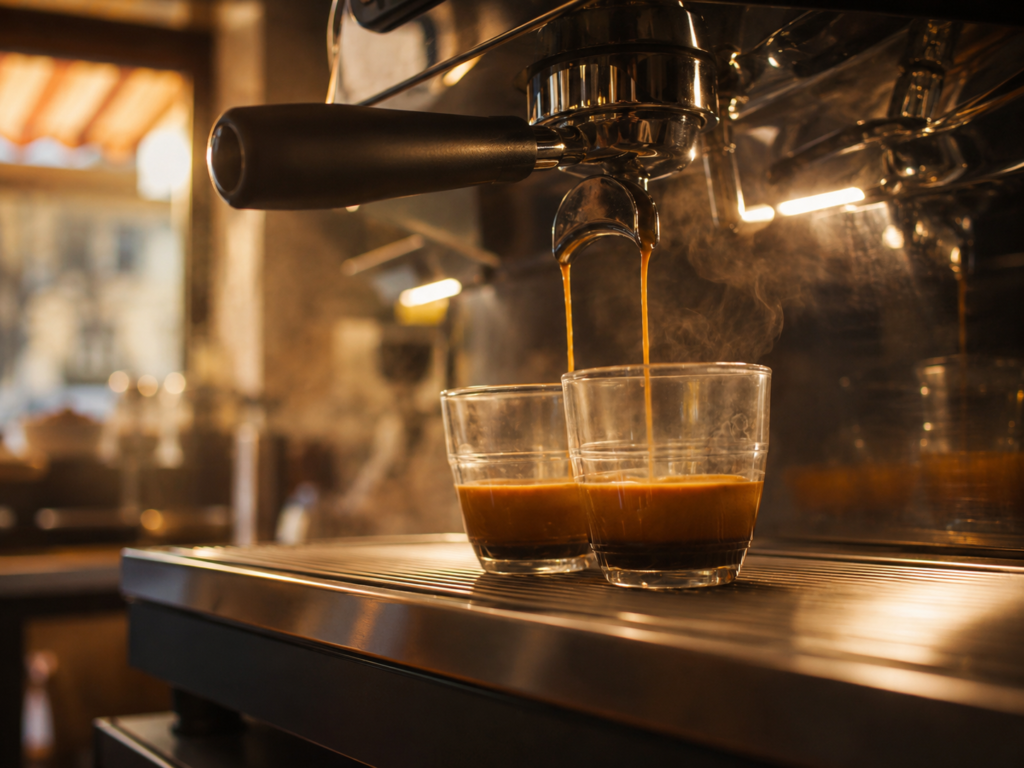
What’s different is the boundary drawn around certain things. A coffee stays a coffee, not a beverage sipped at a desk. Plenty of small shops still pull their shutters down between 1 and 4 p.m., whether or not that’s convenient for anyone in a hurry. Sunday still feels unlike Tuesday. Slow living, in other words, has less to do with speed and more to do with attention. It asks one plain question: are you actually present for the life you’re living?
The Beauty of Everyday Rituals
Much of Italian life runs on repetition — the morning coffee, the walk to the bakery, the evening passeggiata, Sunday pranzo. None of it looks remarkable from the outside. Repeated over years, it builds a rhythm, and rhythm gives a life its shape.
The barista starts to know your order. Certain dishes only appear at certain times — carciofi alla romana in spring, cicoria in winter — so the calendar ends up with a taste to it. It’s probably also why Italian homes feel warm without looking staged: a ceramic bowl filled hundreds of times, a linen tablecloth gone soft after years of washing. Things become beautiful by belonging to a life, not by being new.
Food Is Meant to Be Experienced, Not Just Consumed
Nowhere is the Italian relationship with time more visible than at the table. Flavor matters, but so does context: who you’re eating with, what’s in season, what happened while everyone was still sitting there. A simple lunch runs long because the conversation keeps going after the plates are cleared.
This doesn’t mean every meal is a three-hour affair — most aren’t. But the idea that eating deserves attention is deeply rooted here. When the ingredients are good, they don’t need much done to them — a ripe tomato, good olive oil, bread, salt. Slow living tends to work the same way: not about adding more, but about noticing what’s already good enough.
La Passeggiata: Going Somewhere Without Needing to Arrive
One of the clearest examples of Italian slow living is the passeggiata — the late-afternoon walk with nowhere particular to be. People walk through the center, stop to talk, greet a neighbor, sit for a while in the piazza. In a culture where so much of daily life is scheduled and measured, there’s something almost defiant about walking simply because it’s pleasant to walk.
Living With the Seasons, Choosing Things Well
Traditional Italian life stays close to the calendar, not because seasonality is fashionable but because for generations it was simply how things worked. Certain vegetables belong to summer, others to winter; windows open as the weather warms; balconies fill with herbs and geraniums. Living seasonally builds anticipation, and anticipation is most of what makes something feel special — the first good peaches of summer taste better precisely because you haven’t had one since last August.
The same instinct shows up in objects: a preference for fewer things, chosen well, rather than more things chosen quickly. A leather bag that develops a patina instead of wearing out. Ceramic plates collected slowly over the years rather than bought as a matching set in one afternoon. Some of the most beautiful Italian rooms look as though they evolved rather than were decorated — nothing too perfect, everything carrying a little history.
Making Time for Other People
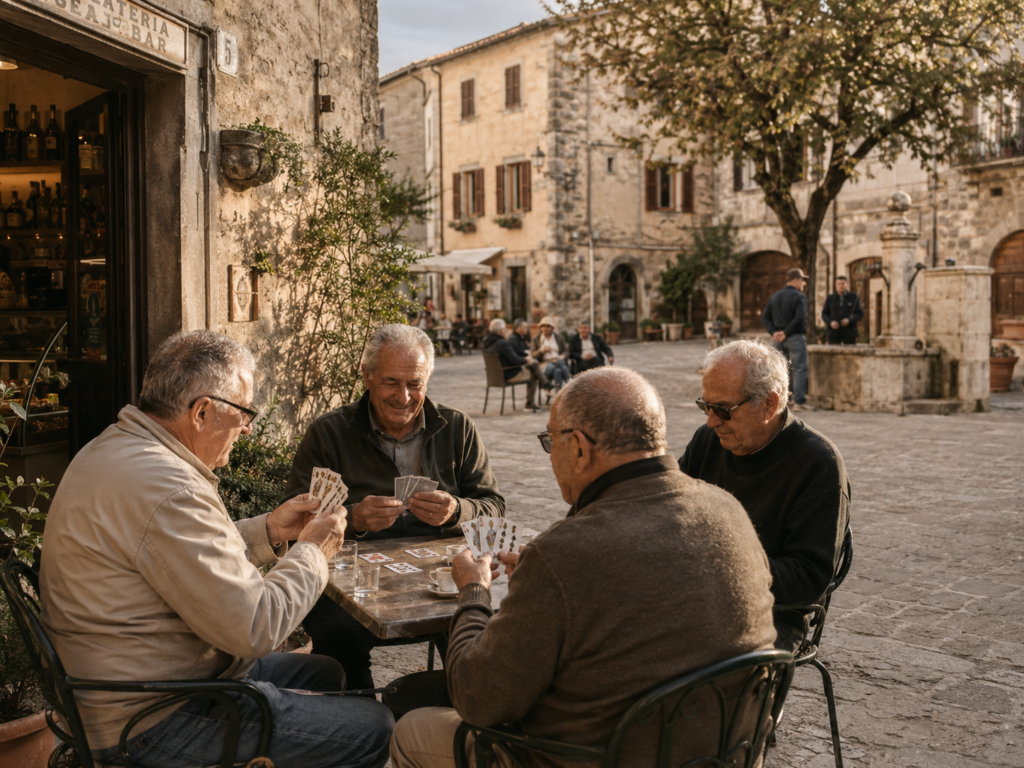
The most important part of la dolce vita has very little to do with objects or places. It’s about people — family, friends, neighbors, the people who run the shop on the corner. Coffee becomes an excuse to see someone. Hospitality doesn’t require elaborate planning; it can be a bottle on the table, some bread sliced, and someone asked to stay a little longer. Relationships need something that can’t be rushed: time. You can’t optimize a friendship.
How to Bring a Little La Dolce Vita Into Everyday Life
You don’t need a house in Tuscany to live a little more slowly. Drink your coffee sitting down. Set the table properly, even for an ordinary Tuesday. Buy something seasonal and build the meal around it. Take an evening walk without tracking your steps. Use the good glasses. Leave your phone in another room during dinner. Learn the name of the person who makes your coffee. Stay at the table a few minutes longer than you need to.
None of this will change your life overnight — that’s almost the point. Slow living isn’t a project with an end date. It’s a series of small decisions about where your attention goes.
The Sweetness Is in the Ordinary
There’s a real danger in romanticizing Italy. Daily life here includes traffic, crowded trains, and dinners eaten in a hurry like anywhere else. The beauty of la dolce vita isn’t that life becomes flawless — it’s that pleasure is allowed to exist right alongside the imperfection. A hard day can still end with a walk. A small apartment can still have basil growing on the windowsill.
When people picture Italy, they usually picture the extraordinary version first: Rome at sunset, a terrace on the Amalfi Coast. But the Italy that has stayed with me lives in smaller moments — cups lined up behind a bar, laundry moving in the breeze from someone’s balcony, dinner starting to smell like something nearby. A good life isn’t built only from vacations. It’s built from Tuesdays too — and the art of slow living is really just learning not to rush past them.