
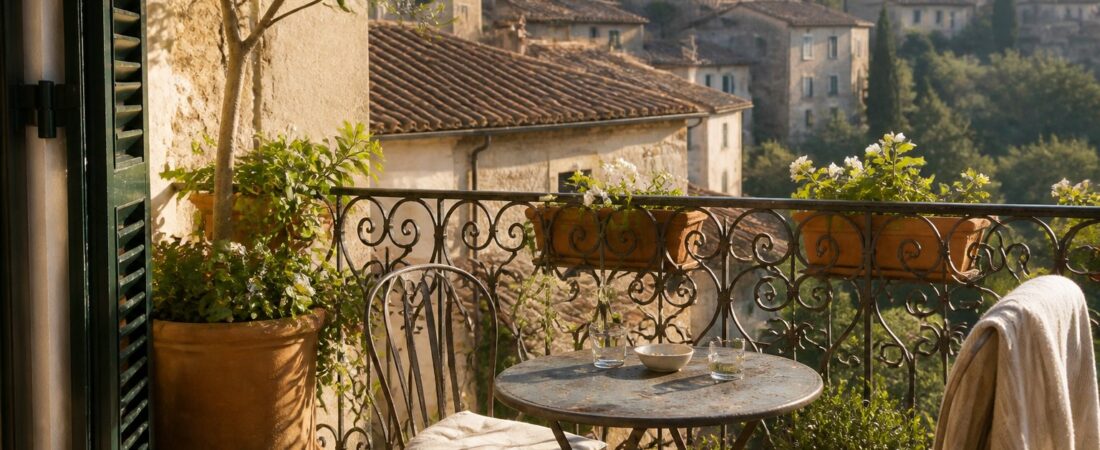
Italian outdoor living is not about having a large garden or a perfect villa terrace. It is about creating a space that invites you to slow down, open the door, sit in the light, and enjoy the beauty of ordinary moments.
A small balcony with herbs can feel just as Italian as a stone courtyard. A simple bistro table can become the place for morning coffee, a quiet lunch, or an evening glass of wine. A terracotta pot, a linen cushion, a lantern, or a climbing vine can change the atmosphere of an outdoor space without requiring a complete renovation.
The Italian approach to outdoor living is warm, practical, and deeply connected to daily life. It is not only about decoration. It is about creating a place that feels used, loved, and naturally beautiful.
1. Start with an Intimate Outdoor Space
Italian outdoor spaces often feel charming because they are intimate. They do not need to be large. In fact, some of the most beautiful Mediterranean spaces are small courtyards, narrow terraces, shaded balconies, or quiet corners just outside the kitchen.
Begin by looking at the space you already have. Where does the sun fall in the morning? Where is there shade in the afternoon? Where could you place a chair, a small table, or a few plants? The goal is to create a simple outdoor room. Even if your space is only a balcony, define it with purpose. A small table, two chairs, a planter, and a soft lantern can make the area feel intentional.
If you have a patio or courtyard, create one clear focal point. This could be a stone planter, a small fountain, an old urn, a potted olive tree, a weathered bench, or a beautiful table. Italian-inspired outdoor spaces often feel calm because they are centered around one strong, simple idea.
A Mediterranean outdoor space should feel intimate, not overdesigned.
2. Use Terracotta, Stone, and Wrought Iron
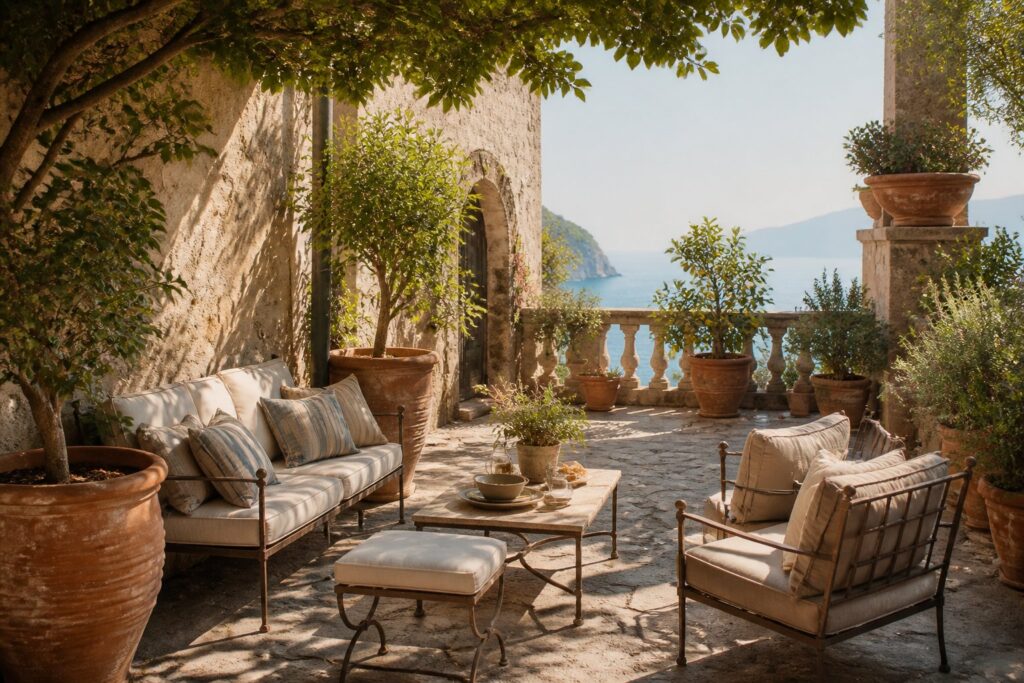
Materials are what give an Italian-inspired outdoor space its character. Terracotta, stone, gravel, aged wood, wrought iron, linen, and ceramic all bring warmth and texture. Terracotta is especially important. It instantly creates a Mediterranean feeling, whether it appears as floor tiles, planters, bowls, or simple garden pots. Its warm clay color works beautifully with greenery and sun-washed walls.
Stone also brings a sense of permanence. A stone path, a gravel border, a limestone planter, or a simple stone-topped table can make even a small outdoor area feel grounded. Wrought iron adds structure and elegance. It can appear in bistro chairs, lanterns, railings, gates, plant stands, or outdoor sconces. Choose simple, restrained shapes rather than anything too ornate. The feeling should be timeless, not theatrical.
If you are working with a modern balcony, start small. Add terracotta pots, a folding bistro chair, a linen outdoor cushion, and one iron lantern. These details can create atmosphere without overwhelming the space.
3. Choose Mediterranean Plants and Herbs
Plants are essential to Italian outdoor living. They bring scent, movement, shade, and a sense of life. A few pots of herbs near the kitchen door can be both decorative and useful. They remind you that beauty does not have to be separate from everyday life.
Start with herbs. Rosemary, basil, sage, thyme, oregano, and lavender are practical and beautiful. They can grow in terracotta pots, small planters, or window boxes, and they make the space feel connected to cooking and daily rituals.
For structure, consider plants with Mediterranean character: olive trees, bay laurel, Italian cypress, boxwood, climbing roses, grapevines, jasmine, or bougainvillea, depending on your climate.
If you live somewhere with cold winters, use containers so plants can be moved or protected. A small potted olive tree or bay laurel can still create the feeling, even if it is not planted permanently in the ground.
The most important thing is layering. Use different heights: a larger pot on the ground, herbs on a table, climbing greenery on a wall or trellis, and smaller planters near seating.
The space should feel alive, fragrant, and slightly softened by nature.
4. Create a Simple “Al Fresco” Dining Area
One of the most beautiful parts of Italian living is eating outdoors, but the expression “al fresco” carries more meaning than simply dining outside. In Italian, it suggests being in the fresh air — ideally somewhere cool, shaded, and comfortable, where you can enjoy a meal slowly, protected from the strongest sun.
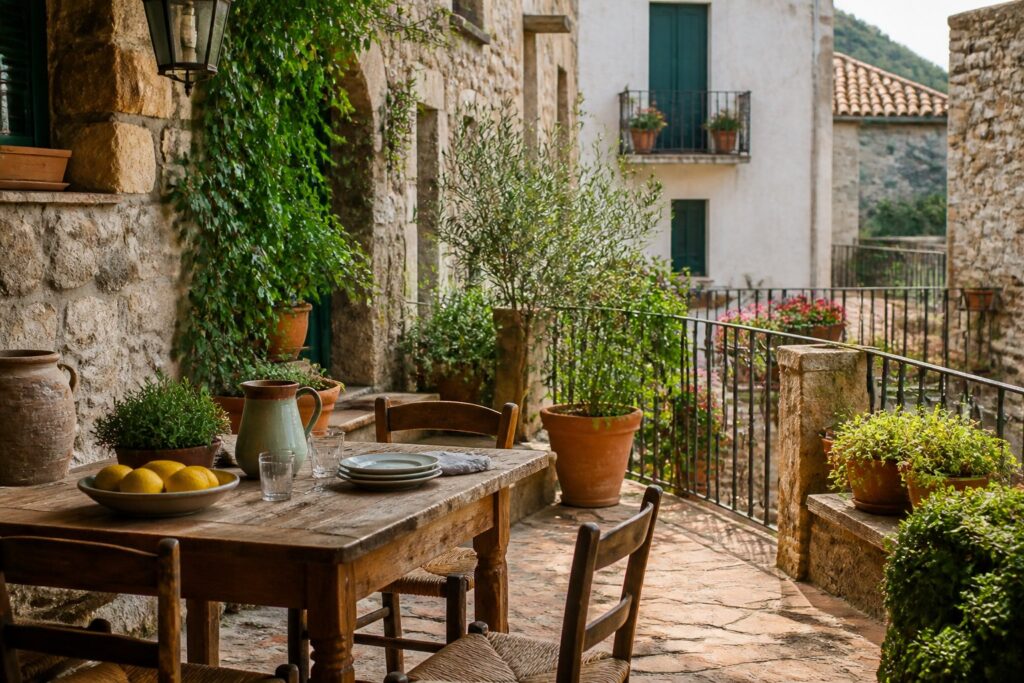
An Italian-inspired outdoor dining area should feel easy, natural, and inviting. You do not need a formal setup. A small table under a pergola, a quiet corner beneath a portico, or a shaded balcony with a soft breeze can be enough.
Place the dining area close to the kitchen if possible. This makes serving simple and encourages everyday use, not only special occasions. A bistro table works beautifully on a balcony, while a rectangular wooden or stone table can anchor a patio or courtyard.
Shade is essential. A pergola covered with vines, a linen umbrella, climbing greenery, or the shelter of a covered porch can make the space feel more intimate and more comfortable. This is what gives outdoor dining its true Italian feeling: not just eating outside, but eating in a place where the light, air, shade, and atmosphere all work together.
Choose comfortable seating and keep the table simple. Ceramic plates, linen napkins, a carafe of water, bread, fruit, herbs, or a small vase with branches are enough. The beauty of al fresco dining comes from ease, a table set without fuss, a little shade, good food, and time to enjoy it.
5. Add Shade for Comfort and Atmosphere
Shade is one of the most important elements of a Mediterranean outdoor space. It makes the area comfortable, softens the light, and creates a sense of retreat.
A pergola can be beautiful if you have the space. It can be covered with vines, climbing roses, jasmine, or grapevines for a romantic, natural effect. For smaller areas, use a large umbrella, an awning, or even a simple fabric shade. Choose neutral fabrics rather than bright modern colors. Cream, sand, warm white, muted stripe, or soft beige usually work best.
Shade should feel practical but elegant. It allows the space to be used during the day and gives the outdoor area a more intimate feeling. If your balcony gets strong sun, a simple umbrella and a few potted plants can make a major difference.
6. Use Lighting to Create Evening Warmth
Italian outdoor spaces often become most beautiful in the evening. Lighting should be soft, warm, and atmospheric. Avoid harsh overhead lights. Instead, use lanterns, wall sconces, candles, or warm string lights.
A lantern on the floor beside a chair, a candle on the table, or lights woven through a pergola can create a gentle glow. The goal is not to make the space bright. The goal is to make it inviting.
Choose finishes that feel natural: aged brass, black iron, bronze, ceramic, glass, or woven materials. These work well with stone, terracotta, and greenery. Even a very small outdoor corner can become special at night with the right lighting.
7. Keep It Practical and Lived-In
The best Italian-inspired outdoor spaces are not overly styled. They are practical, lived-in, and easy to enjoy.
Think about how you will actually use the space. Will you drink coffee there in the morning? Read in the afternoon? Have dinner outside? Grow herbs? Sit with friends? Let the answers guide the design.
If you plan to dine outside, keep serving simple. A tray, small outdoor cart, or nearby surface can make meals easier. If you have a larger patio, a small grill or outdoor prep area can be useful. If you only have a balcony, focus on comfort: a chair, a table, a plant, and a place to set a cup.
Choose fabrics that are washable. Choose furniture that can handle weather. Choose plants that suit your climate. A beautiful outdoor space should not become stressful to maintain. Italian living is about pleasure, but it is also practical.
Final Thoughts
Creating a Mediterranean patio, courtyard, or balcony is less about size and more about feeling. You do not need a villa, a large garden, or a perfect terrace. You need warmth, texture, plants, light, and a place to sit.
Start with one corner. Add a terracotta pot. Plant rosemary or basil. Place a small table near the light. Use linen, ceramic, stone, or iron. Add a lantern for evening. Over time, the space will begin to feel like an extension of your home.
That is the beauty of Italian outdoor living: it brings daily life closer to nature, food, conversation, and simple pleasure. It is not about creating something grand. It is about creating a place where ordinary moments feel more beautiful.