
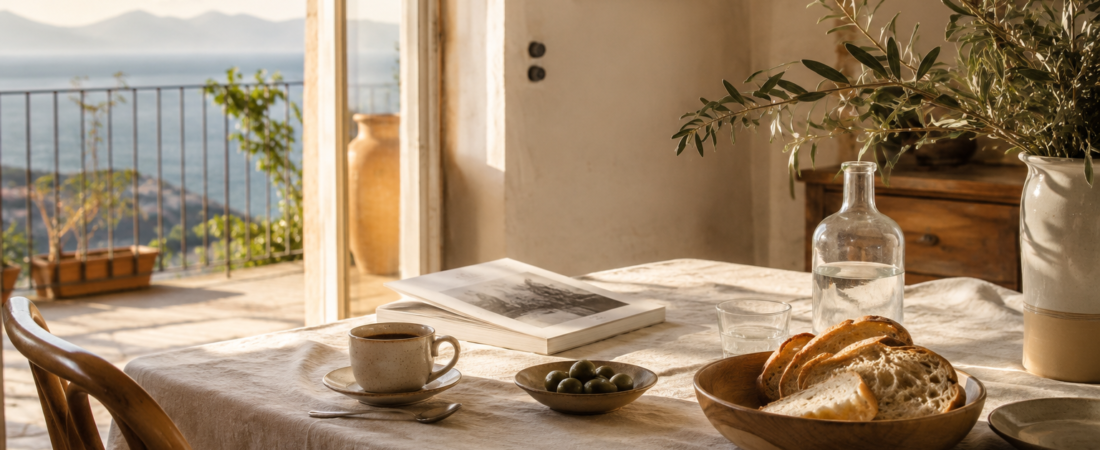
Italian living is not about perfection, luxury, or pretending to live somewhere else. It is about the quiet beauty of daily choices: a table set with care, a meal shared without hurry, a home filled with objects that feel considered, and a rhythm of life that leaves room for pleasure.
At its heart, Italian living is a way of paying attention. It is the art of choosing quality over quantity, beauty over excess, and presence over speed. It can be found in a morning espresso taken slowly, in the scent of fresh basil on the kitchen counter, in linen napkins folded for dinner, in the warmth of a home where people naturally gather.
For those who admire the Italian lifestyle, the appeal is not only in the food, the design, or the landscapes. It is in the philosophy behind them. Italian living invites us to create a life that feels more intentional, more beautiful, and more connected to the everyday.
Italian Living Begins with Everyday Beauty
The Italian way of life has a deep appreciation for beauty, but not in a forced or overly polished way. Beauty is not reserved only for special occasions. It belongs in daily life.
It appears in the way a simple meal is served on real plates instead of rushed from a container. It appears in fresh flowers on a table, a ceramic bowl filled with lemons, a linen shirt worn on an ordinary afternoon, or a well-made chair that has been used for years and only becomes more beautiful with time.
This is one of the most important ideas behind Italian living: everyday life deserves care.
In many modern homes, beauty is treated as something extra, something added after everything practical is finished. The Italian lifestyle often takes a different approach. Practical things can also be beautiful. A kitchen can be functional and warm. A table can be simple and inviting. A wardrobe can be minimal but elegant. A daily ritual can be small but meaningful.
This does not mean life must be perfect. In fact, Italian-inspired living often feels most beautiful when it is lived-in. A kitchen with a pot simmering on the stove, a table scattered with glasses after dinner, a stack of books beside an armchair, or sunlight falling across a stone floor all carry a sense of life being fully inhabited.
Italian living is not about creating a showroom. It is about creating atmosphere.
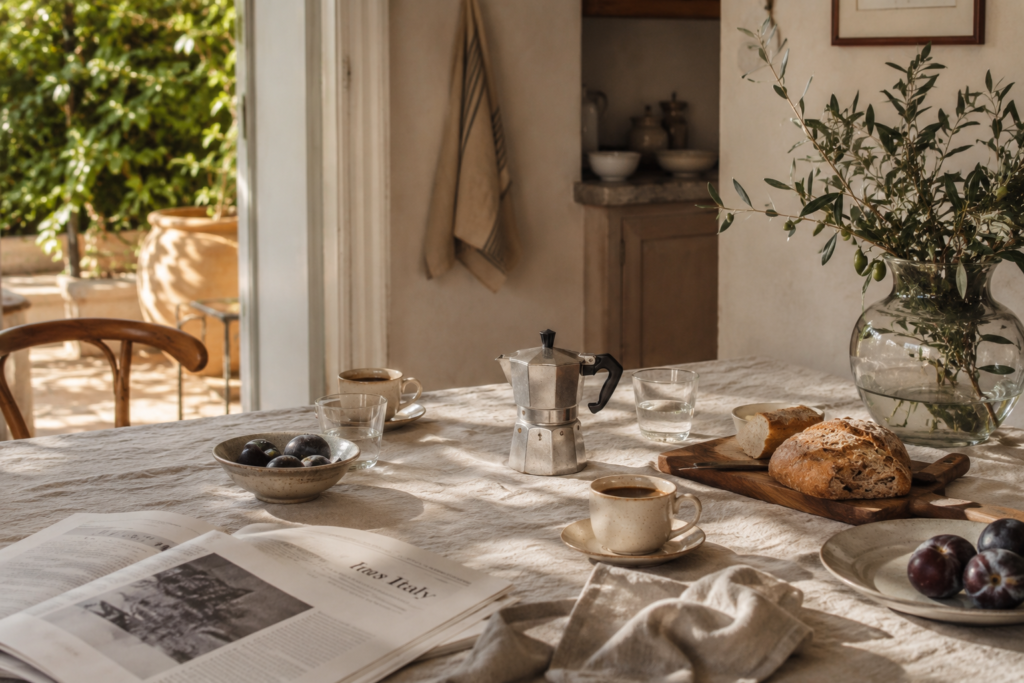
The Italian Home: Warm, Lived-In, and Timeless
The Italian home is one of the clearest expressions of the Italian lifestyle. It is rarely about chasing trends. Instead, it is rooted in warmth, proportion, natural materials, and a sense of timelessness.
An Italian-inspired home often feels collected rather than decorated all at once. It may include wood, stone, linen, terracotta, ceramics, woven textures, old books, family pieces, and objects chosen with care. The result is not overly perfect. It feels personal, grounded, and welcoming.
Color also plays an important role. Warm neutrals, soft ivory, olive green, muted terracotta, natural wood, stone, and sun-washed tones all create a calm Mediterranean feeling. These colors do not shout. They create depth, warmth, and ease.
The Italian home is also centered around gathering. The kitchen, dining table, terrace, or living room often becomes the heart of the home. These are not just functional spaces. They are places where conversation happens, meals are shared, coffee is offered, and guests are made to feel comfortable.
To create an Italian-inspired home, you do not need to fill every room with Italian products. The goal is not imitation. The goal is to adopt the principles: choose natural materials, avoid clutter, invest in pieces that last, create spaces for gathering, and let your home feel warm rather than overly staged.
A beautiful Italian home does not have to be expensive. But it should feel intentional.
Food as a Daily Ritual
Food is one of the strongest symbols of Italian living, but not only because Italian food is loved around the world. The deeper lesson is the way food is woven into daily life.
In the Italian lifestyle, food is not just fuel. It is connection, tradition, pleasure, and rhythm. A meal is a pause. A table is a meeting place. Ingredients are chosen with attention. Even something simple can feel special when it is made with care.
This is why Italian food culture often begins with quality ingredients. Ripe tomatoes, good olive oil, fresh herbs, seasonal vegetables, handmade pasta, aged cheese, crusty bread, and a bottle of wine can create a meal that feels generous without being complicated.
The beauty of Italian cooking is often its simplicity. A dish does not need endless ingredients to feel complete. A few good elements, treated well, are enough.
This philosophy can easily become part of your own life. You might begin by making one meal each week feel more intentional. Set the table, even if the meal is simple. Use a real napkin. Light a candle. Serve fresh bread with olive oil. Put fruit in a bowl. Invite someone to sit down without rushing.
Italian living reminds us that the table is not only where we eat. It is where we return to ourselves and to each other.
Quality Over Quantity
One of the most important principles of Italian living is quality over quantity.
This idea appears everywhere: in food, design, fashion, architecture, home decor, hospitality, and daily rituals. It is the belief that fewer, better things can create a richer life than constant consumption.
In an Italian-inspired home, this might mean choosing one beautiful ceramic serving bowl instead of a cabinet full of pieces you do not love. It might mean investing in linen bedding, a well-made wooden table, a timeless lamp, or a set of glasses that make even an ordinary dinner feel elegant.
In the kitchen, it might mean buying better olive oil, seasonal produce, or a small piece of excellent cheese instead of filling the pantry with things that do not inspire you.
In your wardrobe, it might mean choosing classic pieces that fit well and last longer, rather than following every trend.
Quality over quantity is not about spending more for the sake of spending. It is about becoming more selective. It asks a simple question: does this add beauty, usefulness, or meaning to my life?
This principle is especially important for ItaPassion. Italian living is not about buying endlessly. It is about choosing thoughtfully. It is about surrounding yourself with things that feel beautiful, useful, and lasting.
A slower, more intentional life begins with fewer things chosen with more care.
The Art of Slowing Down
The Italian lifestyle is often associated with slow living, and for good reason. While real life in Italy can be busy and modern like anywhere else, there is still a cultural appreciation for pauses, rituals, and moments of pleasure.
A quick espresso at the bar. A walk through the neighborhood. A long lunch on Sunday. An evening passeggiata. A few minutes of conversation with a shopkeeper. A meal enjoyed without checking the time.
These small rituals are part of what makes Italian living feel so appealing. They create rhythm. They give shape to the day. They remind us that life is not only something to manage, but something to experience.
The phrase dolce far niente is often translated as “the sweetness of doing nothing.” But it does not mean laziness. It means allowing space for presence. It means sitting in the sun for a few minutes. Taking a walk without needing to accomplish something. Enjoying coffee without multitasking. Letting a conversation stretch a little longer.
In a culture that often celebrates speed, Italian living offers a softer alternative. It reminds us that slowing down can be productive in a deeper way. It helps us notice what we are eating, where we are living, who we are with, and what kind of life we are building.
Slow living does not require moving to Italy. It begins with protecting small moments of beauty in the life you already have.
How to Bring Italian Living Into Your Own Life
You do not need a villa in Tuscany or a seaside apartment on the Amalfi Coast to practice Italian living. You can begin exactly where you are.
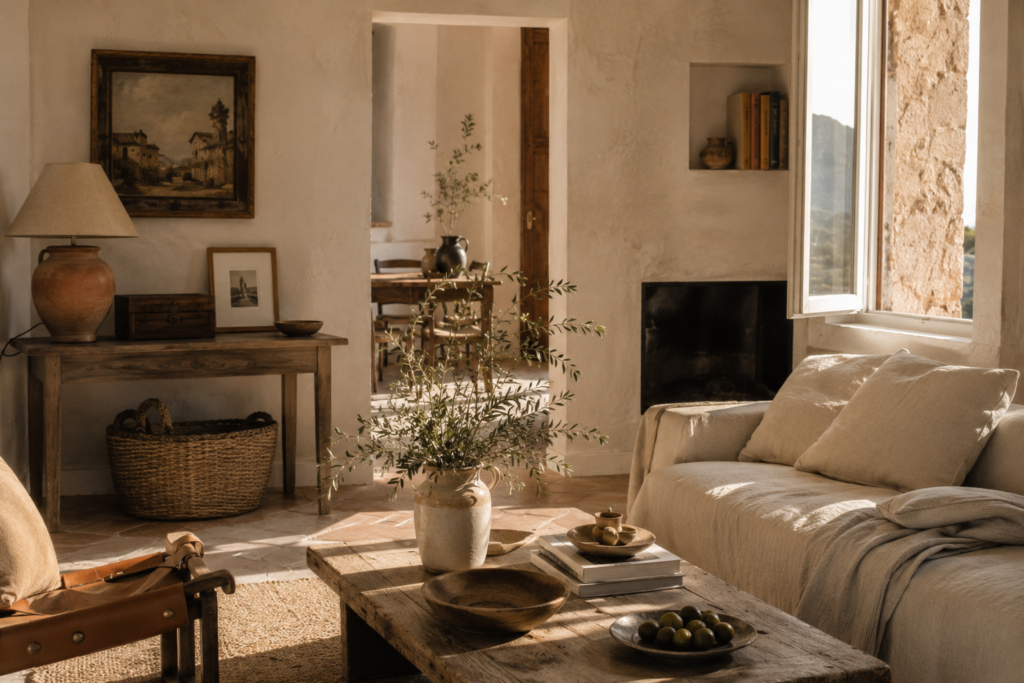
Start with your home. Choose one corner and make it more beautiful. Add a linen tablecloth, a ceramic bowl, a small lamp, a vase of branches, or a stack of books. Create a place that feels calm and intentional.
Then look at your table. Make one meal this week feel slower and more considered. It does not need to be elaborate. Pasta with good olive oil, a simple salad, bread, fruit, and wine can feel beautiful when served with care.
Bring more seasonal ingredients into your kitchen. Visit a local market if you can. Choose produce that feels fresh and alive. Let the season guide what you cook.
Practice hospitality in simple ways. Invite someone for coffee, dessert, aperitivo, or a casual dinner. Italian hospitality is not about impressing people. It is about making them feel welcome.
Edit what you own. Keep pieces that are useful, beautiful, or meaningful. Let go of what feels temporary or excessive. Choose quality where it matters.
Create small rituals. A morning espresso. An evening walk. Sunday lunch. Fresh flowers on Friday. Music while cooking. A few minutes outside after dinner.
These gestures may seem small, but they change the feeling of daily life. That is the essence of Italian living: not a dramatic transformation, but a more beautiful way of noticing, choosing, and being.
The Italian Lifestyle as a Way of Living Well
Italian living is loved around the world because it speaks to something many people are craving: a life with more beauty, more connection, more flavor, and more meaning.
It is not only about Italy as a destination. It is about Italy as inspiration.
The Italian lifestyle teaches us to value the table, the home, the handmade, the seasonal, the social, and the slow. It encourages us to choose things with care, to create spaces that welcome people, and to find pleasure in the ordinary rituals of the day.
At ItaPassion, Italian living means discovering the art of Italian living wherever you are. It means bringing warmth into your home, beauty to your table, intention to your choices, and a little more pleasure into everyday life.
Because the Italian way of life is not only something to admire.
It is something you can begin to live.