
This post contains affiliate links, which means I may earn a small commission if you buy through them, at no extra cost to you.
An Italian kitchen corner is one of the simplest ways to bring warmth, beauty, and everyday Italian feeling into your home.
Ask an Italian where the house really lives and the answer is usually the kitchen. The coffee goes on the stove first thing in the morning, bread gets sliced before dinner, and the olive oil sits within arm’s reach because someone will need it in about ten minutes.
You don’t need a big kitchen or a renovation to create an Italian kitchen corner at home. One small space is enough: a wooden board, a few ceramic pieces, good olive oil, an herb or two. The trick is to choose things you will actually use, so the corner looks lived in instead of arranged for a photo.
Start with a Wooden Cutting Board
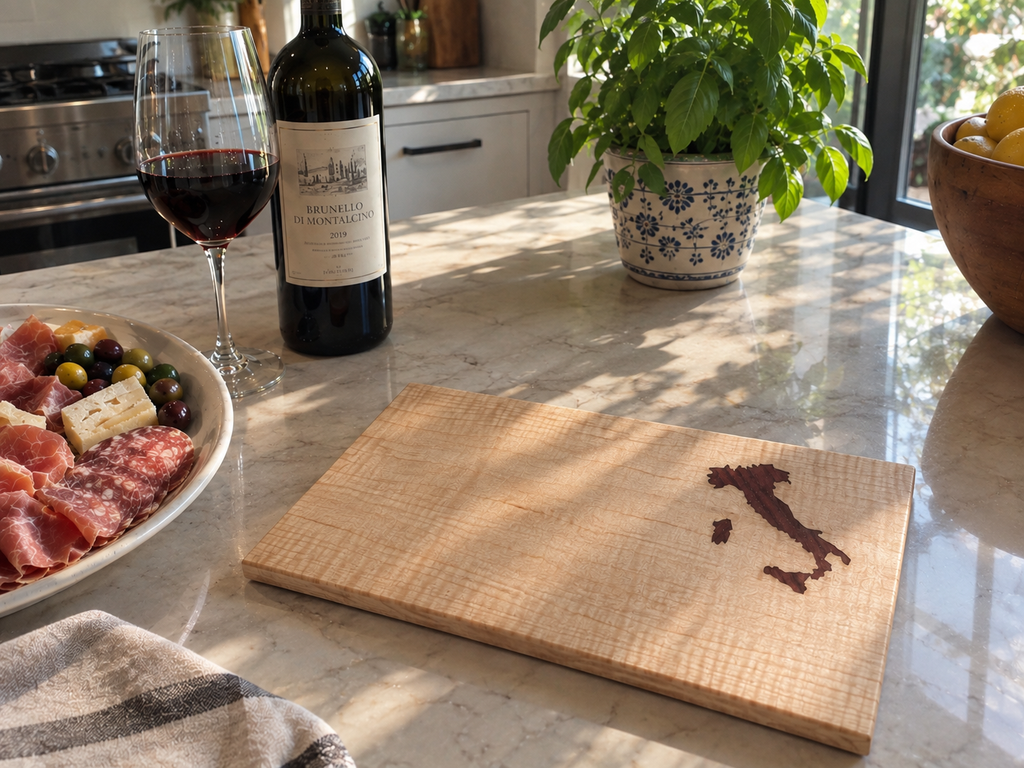
In Italian homes the tagliere does a lot more than cut. It carries salumi and cheese to the table at aperitivo, holds the bruschette while they cool, and often just stays propped against the backsplash because it looks good there. Pick one that is thick and handsome enough to leave out all the time.
A wooden board with Italian character makes a beautiful anchor for an Italian kitchen corner. This Italy inlay cutting board from Randazzo World is a nice example: the shape of the country set into the wood gives you a small piece of Italian craftsmanship that still does its job on a Tuesday night.
You can find the Italy inlay cutting board from Randazzo World here.
Lean it upright against the wall, or lay it flat with a small bowl of olives, a linen napkin, and a few slices of bread.
If you love serving small bites this way, you may also enjoy our guide to the Italian aperitivo at home.
Keep Olive Oil and Vinegar Close
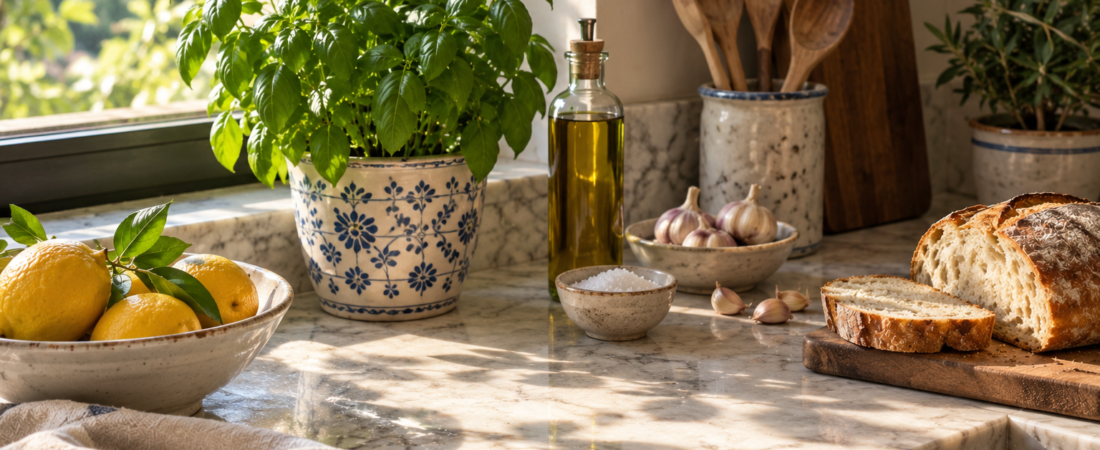
Put a bottle of extra-virgin olive oil next to the stove, ideally one you really cook with. Add a small bottle of vinegar and, if you like a traditional look, a ceramic pourer or a plain glass cruet. A little dish of coarse salt helps too. Together they say more about how Italians cook than any decoration could: a few good ingredients, used often.
Choose Ceramics with Some Character
A mismatched bowl, a handmade plate, a pitcher with a chip in the glaze. Italian kitchens tend to look good because the objects in them have history. Stick to warm colors like terracotta, cream, olive green, or soft blue and white, and don’t worry about matching sets. A collected look reads as more real anyway.
Put the bowls to work. Garlic, lemons, walnuts, and cherry tomatoes all look better in a ceramic bowl than in a plastic bag, and they earn their place on the counter.
Add a Pot of Herbs
Basil, rosemary, sage, or thyme on the windowsill does more for a kitchen than most decor you could buy, and you get to cook with it. If you only have room for one, make it rosemary in a terracotta pot. A single healthy plant looks better than a crowded row of struggling ones.
Leave Bread and Fruit Out
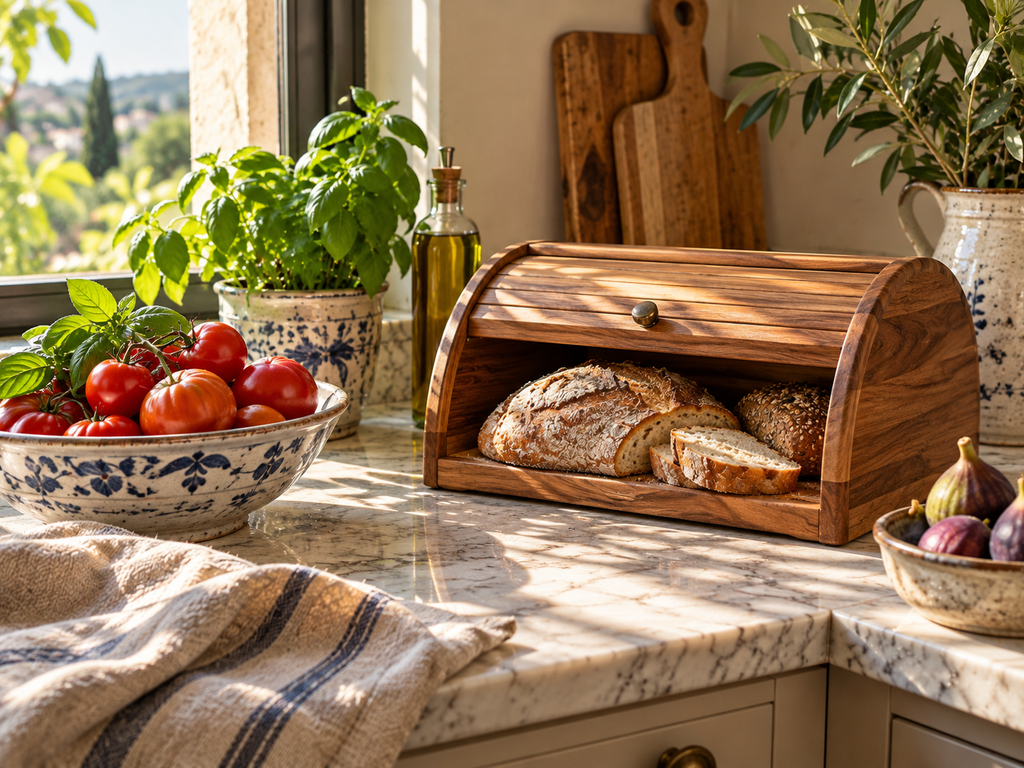
A basket with half a loaf, a bowl of lemons, a few tomatoes ripening by the window. They look good because they are real food that is about to be eaten, and that is what separates a kitchen that looks staged from one that gets used.
If you would rather keep the bread covered, do what many Italian households do and use a portapane, a wooden or enamel bread box. It helps the loaf stay fresh a little longer, and a good one looks just as nice on the counter as a basket does. Leave the lid slightly open when you are serving, and it becomes part of the scene.
Soften It with Linen
A linen dish towel in natural, ivory, or a thin stripe, folded beside the board or hung from a hook, softens the whole corner. Wood, linen, ceramic, glass, and terracotta get along with each other, so you can mix them freely without things getting busy.
How to Keep Your Italian Kitchen Corner Simple
Resist the urge to add more. The corner should look like someone could walk up and start making dinner. If you want a starting list, this is enough:
- A wooden cutting board
- A bottle of olive oil
- A ceramic bowl
- A pot of herbs
- A linen towel
- Something seasonal, like lemons, tomatoes, or fruit
Everything else is optional.
Final Thoughts
Buy fewer things and use them more. A good board, some olive oil, a few herbs, and a bowl of fruit can warm up even the smallest kitchen, and they turn the daily routine of cooking into something closer to a ritual.